

What Is My Role As An Executor/Administrator?

We are often asked: “I’ve been named as Executor in my mother’s Will.  What does an Executor of an estate do?” First, for terminology, an Executor in certain cases can be referred to as an Administrator, but the role is very similar so we’ll combine all the terms under Personal Representative, or “PR” for short.  The main responsibility of a PR is settling the estate of a decedent, but you may be wondering what it actually takes to settle an estate.

Below is a brief synopsis of some key PR duties:

(1)  Locate the Will.

The most important document the PR should locate is the original Will.  The Will specifies how the decedent’s assets should be distributed to the beneficiaries.

(2) Gather Assets.

The PR should gather all asset information including, but not limited to, account statements, vehicle information, listing of tangible personal property, and Shareholder Agreements or Operating Agreements. This information will assist the PR in determining the classes of assets and the value of the estate.  It also allows the PR to determine if it is necessary to probate the estate with the Clerk of Court.  It is at this point that we recommend PRs seek legal counsel.

(3)  File Court Documents.

If it is determined that probate is necessary, the PR will file the original Will, death certificate and initial paperwork with the Clerk of Court to open the estate.  The probate process involves several filings with the Court including a 90 Day Inventory and Annual/Final Account.

(4)  Notice to Creditors. 

As required by statute, the PR should publish a Notice to Creditors with an approved local publication. Creditors of the decedent will have a set timeframe within which to present their claim for payment and the end of this period can be referred to as the Claims Bar Date.  Claims received should normally not be paid until after the Claims Bar Date.  The statutes set forth the order for claims to be paid and it can be very important for PRs to follow these rules to avoid personal liability for estate debts.

(5) Taxes.

The PR should work with an accountant to prepare and sign the decedent’s final individual income tax return and estate tax returns (estate income and estate and gift tax returns, as applicable).

(6)  Distribute Assets.

Once all expenses and claims have been paid, the PR should distribute estate assets according to the terms of the Will.

(7)  Close Estate.

After all of the estate assets have been distributed, the estate file should be closed with the Court.

An important area of our practice is guiding clients through their appointment as PR.  We understand how much responsibility is given to these individuals and we strive to make it as easy as possible along the way. If you have had a loved one pass and need assistance through the process or would like more details about the PR role, please contact us to speak with one of our attorneys.


* Intended as general guidance only and not as legal advice.

Three Reasons To Talk To Your Kids About Your Estate Plan

Have you been avoiding the “uncomfortable” topic of your estate plan with your children? You want to do what is best for your children but perhaps you are legitimately concerned that your children are too young or busy, the conversation will be perceived as morbid or will not deliver the message you intend, or you just think it is too personal or confusing to discuss. For these and many other reasons, it is certainly an easy discussion to put off. However, with the holidays and plenty of family time approaching, we want to review three important reasons to take the plunge and have this critical conversation.

1. It’s Practical.

Put simply, if you want things done according to plan, you need to communicate the plan. Most children we speak with do actually want to know about their parents’ arrangements and wishes so they can help carry them out. Even if you choose not to share the financial details, at a minimum, we recommend discussing two basic things with your children. First, tell them the location of and how to get access to your important documents. Second, tell them the people on your “team” (e.g. financial advisor, accountant, attorney) that they should contact immediately after your death. This may seem obvious but preparing them for the actions they will need to take at your death will alleviate unnecessary stress for them during the emotional time immediately after.

2. Providing the “Why”.

Although your estate plan documents detail what goes where, they usually do not explain why. For example, unequal distributions or receipt of large sums or complex assets may be confusing to your children without the proper context or instructions. Communicating with your kids now, either one-on-one or in a family meeting can help to avoid confusion or hurt feelings after your death. It is also a great opportunity to share your values with the next generation so that they can continue your legacy. If you cannot find the courage for a conversation, at least consider writing your wishes and objectives in a non-binding letter format to keep with your other important papers.

3. A Teachable Moment.

As a parent, you have been given the privilege of leading your children by example. If you discuss the importance of estate planning with them now, you can teach them not only what you have learned about the process but also emphasize why it is critical for them to undertake as well. In addition, recognize that your estate plan may impact the planning that your children implement for their own families.

Don’t keep your kids in the dark or let the opportunity to communicate the plan, your “why”, and the importance of the process slip by. It can be as simple as starting with “I know you might think of this as an uncomfortable topic, but it is important to discuss it so you are prepared.” In addition, our attorneys have experience planning and conducting family meetings and would be happy to help you start the conversation by arranging one or more meetings at your request.


* Intended as general guidance only and not as legal advice.

What Happens If I Die Without A Will?

As estate planning attorneys, we often get the question: “Who needs an estate plan?”  The answer is: “EVERYONE!”  Studies have shown that only 42% of American adults currently have an estate plan in place.  For the 58% of Americans who don’t have an estate plan, dealing with intestacy laws and the probate process places a huge burden on loved ones left behind.

If you die without a Will in North Carolina, you lose control over a number of important decisions.  North Carolina’s default statutes provide what happens upon your death, regardless of your particular situation or circumstance:

(1) Intestacy laws govern the disposition of your property.

These intestacy laws are default rules that provide for automatic beneficiaries and automatic fiduciaries, without any ability for custom adjustment.  Although these laws do an adequate job of ensuring property stays within the immediate family, they rarely capture exactly – and in many cases even nearly – what the decedent would want to happen.

(2) Individually-held assets are subject to the probate process.

Probate is a lengthy and costly process where the court oversees the management and disposition of the estate assets.  Court filings during the probate process are public record and the responsibilities placed on surviving loved-ones can be overwhelming for many people.

(3) Guardianship of minor children will be determined by the court.

While the court will always look to the best interests of the child, the parents’ guardianship decision and wishes will be unknown without an estate plan.

In almost every circumstance, consulting with an attorney and establishing an estate plan that fits your particular situation can eliminate the applicability of these default laws.  We encourage all of our clients to take control and be proactive in planning for their family’s future.

Please contact us to speak with one of our attorneys in further detail about how you can be proactive with your planning.


* Intended as general guidance only and not as legal advice.
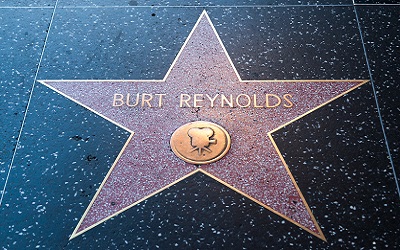
Will vs. Revocable Trust; Why Burt Reynolds Chose to Exclude His Son from His Will?

The passing of movie icon Burt Reynolds brings to light how certain estate planning techniques differ as they unfold. Selecting a revocable trust – versus only a Will – as Burt chose to do for the benefit of his son, Quinton, has its advantages. One that’s highlighted in the current stories about Burt’s passing is privacy. A simple Will is part of the probate process and its terms are public. On the other hand, the terms of a revocable trust are private and confidential. Just as important (and maybe more so in a world where digital crimes are more prevalent), the assets that were titled to the trust during Burt’s lifetime will pass to his beneficiaries without becoming part of a public inventory. This is another reason that many of our clients choose this same type of plan that includes a revocable trust.

Our experienced team of legal advisors is here to help guide clients through the options.


** The information contained in this communication is not intended to constitute legal, accounting or tax advice.


Annual Gifting: It’s Never Too Early To Start Thinking About Gifting

Gift planning can be an important component of estate planning and, if the right techniques are executed, can reduce your overall tax burden. With this in mind, it is never too early to be thinking about gifting to your children and/or grandchildren. The annual gift tax exclusion is the most commonly used method for tax-free giving. For 2018, the annual exclusion is $15,000 per child. This is applied on a per-donee basis and can be leveraged by making gifts to multiple donees. For example, if an individual makes $15,000 gifts to 5 donees, he or she may then exclude $75,000 from gift and estate tax.

If you would like to discuss your gifting options for this year, please contact us to further discuss your particular objectives.

** The information contained in this communication is not intended to constitute legal, accounting or tax advice.


Family Limited Partnership: F.A.Q.

A Family Limited Partnership (“FLP”) is a structure that is known for two main purposes: asset protection and tax minimization. Its ability to handle both of these important wealth generators puts it in the running as one of estate planning’s most valuable tools, if implemented and maintained properly.

Below, you will find some frequently asked questions that we receive from our clients regarding FLPs.

(1) What is an FLP?

An FLP is a limited partnership in which all the partners are family members or entities created by or owned by family members. A limited partnership is a business entity that consists of at least one general partner and at least one limited partner. Today, limited liability companies (LLCs) are commonly used in place of limited partnerships to accomplish all of these same purposes, even though the acronym “FLP” has stuck.

(2) Who is in charge of the FLP?

It varies, but often parents or grandparents. Children or grandchildren are more often limited partners (or Members) with less control.

(3) What type of asset goes into an FLP?

A common asset to fund an FLP is an investment account that isn’t normally touched on a day-to-day basis. Other assets that are great to fund an FLP are investment real estate and, potentially, stock of a closely held company. However, it is important to remember that stock in an S-Corporation should not be transferred to an FLP, as partnerships are not permissible shareholders of S-Corporations.

(4) How does an FLP protect my assets?

In the event you are sued or attacked by creditors, assets in an FLP will be protected against any liability you may face individually. An FLP is a great way to protect assets with large values for those whose professional careers are prone to lawsuits. Since you technically don’t own the asset transferred to the FLP, creditors generally cannot reach that asset.

(5) How can an FLP help me reduce my tax obligations?

By transferring assets to an FLP, you no longer own the asset individually. The only asset included in your gross estate upon your death is your ownership interest in the FLP. The interests in the FLP can be attractive for tax reasons because of certain discounts they receive, such as discounts for transferring minority interests in the FLP as well as for the lack of marketability the FLP interests have. These discounts are favorable for transferring interests in the FLP to children or grandchildren at a reduced value, thus saving on gift taxes.

If you are interested in forming an FLP to protect your assets or potentially reduce taxes, please contact us to speak with one of our attorneys.


** The information contained in this communication is not intended to constitute legal, accounting or tax advice.