

What Happens If I Die Without A Will?

As estate planning attorneys, we often get the question: “Who needs an estate plan?”  The answer is: “EVERYONE!”  Studies have shown that only 42% of American adults currently have an estate plan in place.  For the 58% of Americans who don’t have an estate plan, dealing with intestacy laws and the probate process places a huge burden on loved ones left behind.

If you die without a Will in North Carolina, you lose control over a number of important decisions.  North Carolina’s default statutes provide what happens upon your death, regardless of your particular situation or circumstance:

(1) Intestacy laws govern the disposition of your property.

These intestacy laws are default rules that provide for automatic beneficiaries and automatic fiduciaries, without any ability for custom adjustment.  Although these laws do an adequate job of ensuring property stays within the immediate family, they rarely capture exactly – and in many cases even nearly – what the decedent would want to happen.

(2) Individually-held assets are subject to the probate process.

Probate is a lengthy and costly process where the court oversees the management and disposition of the estate assets.  Court filings during the probate process are public record and the responsibilities placed on surviving loved-ones can be overwhelming for many people.

(3) Guardianship of minor children will be determined by the court.

While the court will always look to the best interests of the child, the parents’ guardianship decision and wishes will be unknown without an estate plan.

In almost every circumstance, consulting with an attorney and establishing an estate plan that fits your particular situation can eliminate the applicability of these default laws.  We encourage all of our clients to take control and be proactive in planning for their family’s future.

Please contact us to speak with one of our attorneys in further detail about how you can be proactive with your planning.


* Intended as general guidance only and not as legal advice.
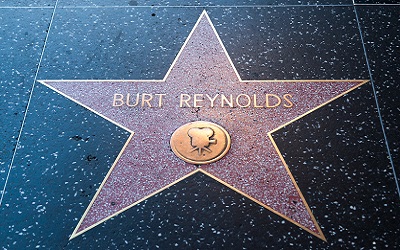
Will vs. Revocable Trust; Why Burt Reynolds Chose to Exclude His Son from His Will?

The passing of movie icon Burt Reynolds brings to light how certain estate planning techniques differ as they unfold. Selecting a revocable trust – versus only a Will – as Burt chose to do for the benefit of his son, Quinton, has its advantages. One that’s highlighted in the current stories about Burt’s passing is privacy. A simple Will is part of the probate process and its terms are public. On the other hand, the terms of a revocable trust are private and confidential. Just as important (and maybe more so in a world where digital crimes are more prevalent), the assets that were titled to the trust during Burt’s lifetime will pass to his beneficiaries without becoming part of a public inventory. This is another reason that many of our clients choose this same type of plan that includes a revocable trust.

Our experienced team of legal advisors is here to help guide clients through the options.


** The information contained in this communication is not intended to constitute legal, accounting or tax advice.


Annual Gifting: It’s Never Too Early To Start Thinking About Gifting

Gift planning can be an important component of estate planning and, if the right techniques are executed, can reduce your overall tax burden. With this in mind, it is never too early to be thinking about gifting to your children and/or grandchildren. The annual gift tax exclusion is the most commonly used method for tax-free giving. For 2018, the annual exclusion is $15,000 per child. This is applied on a per-donee basis and can be leveraged by making gifts to multiple donees. For example, if an individual makes $15,000 gifts to 5 donees, he or she may then exclude $75,000 from gift and estate tax.

If you would like to discuss your gifting options for this year, please contact us to further discuss your particular objectives.

** The information contained in this communication is not intended to constitute legal, accounting or tax advice.


Family Limited Partnership: F.A.Q.

A Family Limited Partnership (“FLP”) is a structure that is known for two main purposes: asset protection and tax minimization. Its ability to handle both of these important wealth generators puts it in the running as one of estate planning’s most valuable tools, if implemented and maintained properly.

Below, you will find some frequently asked questions that we receive from our clients regarding FLPs.

(1) What is an FLP?

An FLP is a limited partnership in which all the partners are family members or entities created by or owned by family members. A limited partnership is a business entity that consists of at least one general partner and at least one limited partner. Today, limited liability companies (LLCs) are commonly used in place of limited partnerships to accomplish all of these same purposes, even though the acronym “FLP” has stuck.

(2) Who is in charge of the FLP?

It varies, but often parents or grandparents. Children or grandchildren are more often limited partners (or Members) with less control.

(3) What type of asset goes into an FLP?

A common asset to fund an FLP is an investment account that isn’t normally touched on a day-to-day basis. Other assets that are great to fund an FLP are investment real estate and, potentially, stock of a closely held company. However, it is important to remember that stock in an S-Corporation should not be transferred to an FLP, as partnerships are not permissible shareholders of S-Corporations.

(4) How does an FLP protect my assets?

In the event you are sued or attacked by creditors, assets in an FLP will be protected against any liability you may face individually. An FLP is a great way to protect assets with large values for those whose professional careers are prone to lawsuits. Since you technically don’t own the asset transferred to the FLP, creditors generally cannot reach that asset.

(5) How can an FLP help me reduce my tax obligations?

By transferring assets to an FLP, you no longer own the asset individually. The only asset included in your gross estate upon your death is your ownership interest in the FLP. The interests in the FLP can be attractive for tax reasons because of certain discounts they receive, such as discounts for transferring minority interests in the FLP as well as for the lack of marketability the FLP interests have. These discounts are favorable for transferring interests in the FLP to children or grandchildren at a reduced value, thus saving on gift taxes.

If you are interested in forming an FLP to protect your assets or potentially reduce taxes, please contact us to speak with one of our attorneys.


** The information contained in this communication is not intended to constitute legal, accounting or tax advice.

Protecting Investment Property From The Rush Of Vacationers

In today’s litigious society, we often have clients calling us and asking for advice on how to protect themselves and their assets from creditors and lawsuits.  Many worries stem from concerns over rental properties and vacation homes (including toys such as jet skis) owned by our clients.

There are several techniques that can help the owner of a vacation home relax whenever he rents out the house to vacationers. Often an important starting point is the use of a Limited Liability Company (“LLC”). Below, we highlight some major aspects.

Reduced Liability

This is a big one. Imagine someone is staying at your house for the week, comes in from the beach, slips and falls at your rental property and sues you for damages. If the property is owned by an LLC at the time of the accident, and you’ve taken other prudent steps including those regarding the maintenance and rental of the property, your risk can be limited to the amount of your investment in the LLC. This is a much better result than the case where the vacationer/tenant can reach your personal home, savings, investments, etc. In summary, liability claims can be significantly minimized with this structure, helping to protect your personal assets.

Additional Considerations

We also find that clients enjoy the mental separation of their business and personal assets. Setting up their rental property in an LLC allows them to treat it as a business and have a clear separation of expenses and revenues. To take this a step further, if you own multiple rental properties, each property can be ‘insulated’ from the other.

Amenities like golf carts, jet skis, and boats can be a gold mine for renters, but with the fun comes potential risks. Having renters sign a liability waiver can help avoid losses should an unfortunate event occur.


* Intended as general guidance only and not as legal advice.

Navigating Business Tax Classifications In 2018

The Tax Cuts and Jobs Act of 2017 (the “Act”) has dramatically changed the tax landscape this year.  Two important changes include the new 20% deduction for pass-through entities, such as S-corporations and partnerships, and the 21% flat tax rate for C-corporations.  Where conventional wisdom once dictated that most small business owners elect S-corporation tax status for their companies (a “pass-through” option), these new rules should have owners re-considering whether C-corporation tax status might offer better tax results.

In this post, we will compare S-corporation (pass-through taxation) and C-corporation (corporate taxation) tax classifications for business owners at two different income levels. One example covers an owner with taxable income just below the $315,000 taxable income phase-out threshold for married filing jointly status (“Income Level I”) and one shows an owner with total income of $1 Million (“Income Level II”) when factoring in both her personal income (from W-2 wages) and business net income. The detailed examples can be found here.

As for our conclusions, at incomes around Income Level I, there is an advantage to using pass-through taxation because much of the income is taxed on the individual’s return at rates below the 21% rate applicable to C-corporations. However, at higher personal income levels, such as Income Level II, if there is a desire to re-invest significant funds in the business, using C-corporation taxation may enable a business owner to pay lower income taxes and therefore have more funds for business growth.

Should you choose S-corporation or C-corporation income tax classification?

As with many tax questions, the answer ultimately is: it depends. Specifically, the owner’s goals for the business profits should be a driving force in determining the appropriate tax classification in each situation. Pass-through entities expose business income to individual brackets which include rates below 21%. If this amounts to a major portion of the income, it can be a very important factor and favors pass-through entities such as S-corporations and partnerships. As personal incomes increase, more individual income will be exposed to brackets above 21% and, if the intention is to leave it in the corporation anyway, then the C-corporation classification can result in lower income taxation. Business owners should consult with their CPAs, attorneys, and financial advisors to take full advantage of these new tax laws.


* Intended as general guidance only and not as legal advice.