Align Your Three Bottom Lines

By Todd A. Stewart, Founding Partner

On May 20, 2019, I was in a program with author Kevin W. McCarthy where he talked about his book, Chief Leadership Officer: Increasing Wealth So Everyone Profits. Many good takeaways and I particularly like the idea of aligning your three bottom lines: Financial, People and Purpose.  If you want more information, the website is: http://chiefleadershipofficer.com/.

*Intended as general guidance only and not as legal advice.

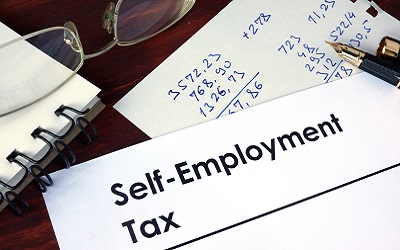
Avoiding Self-Employment (SE) Tax With LLC

Saving self-employment (SE) tax on the business earnings of a partner or sole proprietor can be significant, with rates from 2.9% to 15.3%. Partners in some cases have avoided this SE tax on their distributive share for an interest as a limited partner in a limited partnership (LP).

Today, however, LLCs are in much more common use than LPs for business and investment purposes. This makes it unfortunate that it’s still not clear that a passive member of an LLC can avoid the SE tax. Recently though, the Tax Court allowed limited partner treatment to a passive member of an LLC (the case was Hardy v. Commissioner.)

There are some steps you can take to help secure this treatment for your passive interest in an LLC and, depending on the circumstances, you may still want to go with an LP structure if this type of tax savings is particularly important.

If you’d like to further discuss your business structure or any other tax savings ideas, please contact us to speak with one of our attorneys.

** The information contained in this communication is not intended to constitute legal, accounting or tax advice.

A Possible Reduced-Rate Roth Conversion for Business Owners

Here’s an idea that can be very powerful for some business owners.  The 2017 Tax Act provides business owners with a 20% deduction on their business profits (Qualified Business Income or QBI).  The catch is that the 20% is applied to taxable income if that’s lower.  In other words, if taxable income is going to be lower than QBI, then you miss the opportunity to have some income that will receive a 20% deduction.

Therefore, if you accelerate income, some of the cost of doing so will be eliminated by the increase you are creating with a larger QBI deduction.  There are a number of ways to accelerate income.  However, one of the most exciting ones is creation of an account that can grow tax free and be withdrawn on a tax-free basis: the Roth IRA. 
 
In conclusion, if your 20% deduction is not being applied to your full QBI, then check with your CPA and financial advisor about a Roth conversion.  You may be able to create an income tax-free account at a reduced cost.

*Intended as general guidance only and not as legal advice.

Does Your Rental Real Estate Activity Qualify for the 20% Sec. 199A Deduction?

By now, you’ve likely heard that certain businesses can qualify for a 20% income deduction under the new tax law.  This is true for an “active trade or business.” 

Earlier this year the IRS issued a proposed safe harbor setting out how rental real estate activities can qualify as an active trade or business for the 20% business deduction. By safe harbor, we mean rules that should work, but taxpayers can still use case law to show their activities qualify as an active trade or business. In other words, this safe harbor can allow you to reduce the effective rate on the taxable income of your rental real estate business from 37% to 29.6%.

Here are the requirements to qualify for the safe harbor:
  1. Maintain separate books and records for the income and expenses of each enterprise. You can elect to treat each property as a separate enterprise or all similar properties as a single enterprise, subject to some exceptions.
  2. Keep contemporaneous records (e.g., time reports) for all services performed for tax years beginning January 1, 2019.
  3. Perform 250 or more hours of rental services. The services can be performed by owners, employees, agents and independent contractors, which may include management and maintenance companies who provide the contemporaneous records. “Rental services” do not include activities such as arranging for financing; reviewing financial statements; or traveling to or from the real estate. “Rental services” do include negotiating and executing leases; collecting rent; daily operation, maintenance and repair; and supervision of employees and independent contractors.
That said, here’s who can’t qualify:

A. Taxpayers who rent under triple net leases, meaning those where the tenant pays taxes, fees, insurance and maintenance. It includes cases where the tenant is required to pay common area maintenance expenses.

B. Taxpayers who rent under triple net leases, meaning those where the tenant pays taxes, fees, insurance and maintenance. It includes cases where the tenant is required to pay common area maintenance expenses.

In summary, if you’d like to take advantage of the safe harbor and secure the lower tax rate, convert triple net leases and make sure enough time is spent on the right services at the property. To discuss your situation, or for further details, please contact us and speak with one of our attorneys.

** The information contained in this communication is not intended to constitute legal, accounting or tax advice.
4 Ideas for Deferring Taxable Income to Next Year

Deferring taxable income to a later year is often an effective strategy for paying less in income taxes and keeping more of your wealth working for you. For example, if you are organized as an S Corporation or Partnership for income tax purposes and anticipate being in the same or a higher tax bracket in 2018 than in 2019, then you may benefit from deferring income into 2019. 

Here are four ways you might achieve this:

(1) Cash Method of Accounting

The Tax Cuts and Jobs Act (TCJA) expanded the number of businesses that can use the cash method of accounting.  This can be important for you because often you are better able to accelerate deductions and defer income by adopting the cash (versus accrual) method of accounting. It’s not too late to implement this idea because an automatic change to the cash method can be made by the due date of the tax return including extensions. Who can make this change?  Sole proprietors, partnerships, and S corporations can change to the cash method of accounting without regard to their average annual gross receipts so long as inventories are not a material income-producing factor. C corporations (or partnerships with a C corporation partner) with average annual gross receipts of $25 million or less for the prior three taxable years can make an automatic change to the cash method.

(2) Delay Billing

If you are on the cash method, delay year-end billing to clients so that payments are not received until 2019. 

(3) Installment Sales

Generally, a sale occurs when you transfer property. If a gain will be realized on the sale, income recognition will normally be deferred under the installment method until payments are received, so long as one payment is received in the year after the sale. So if you are expecting to sell property prior to the end of 2018, and it makes economic sense, consider selling the property and report the gain under the installment method to defer payments (and tax) until next year or later.

(4) Interest and Dividends

Interest income earned on Treasury securities and bank certificates of deposit with maturities of one year or less is not includible in income until received. To defer interest income, consider buying short-term bonds or certificates that will not mature until next year. Unless you have constructive receipt of dividends before year-end, they will not be taxed to you in 2018 (exceptions may apply if you have control over when dividends are paid to you.)

If you’d like to further discuss any of these or other tax savings ideas, please call and speak with one of our attorneys.

** The information contained in this communication is not intended to constitute legal, accounting or tax advice.

Small Business End-Of-Year Checklist

The end of year is a busy time for many reasons. Travel plans, holiday hosting, and family visits tend to keep your calendar packed. But as a small business owner you have additional obligations that need to be addressed. The end of year is a perfect time to assess your current business, make some decisions, and set some overall goals to ensure you start the New Year off right. When 2019 rolls around be sure you took the time to self-assess with this Checklist:

(    )   December is not too late to make a number of moves that can lower your income tax bill. Consult with your advisor team about important income and deduction items as well as new structures that you may want in place for 2019.

(    )   Take the time to express gratitude to the folks who made positive differences for you this past year.

(    )   As you review your financial results for 2018, it’s a great time to set goals for 2019 and make an actionable plan that will help you start achieving these objectives right away.


* Intended as general guidance only and not as legal advice.